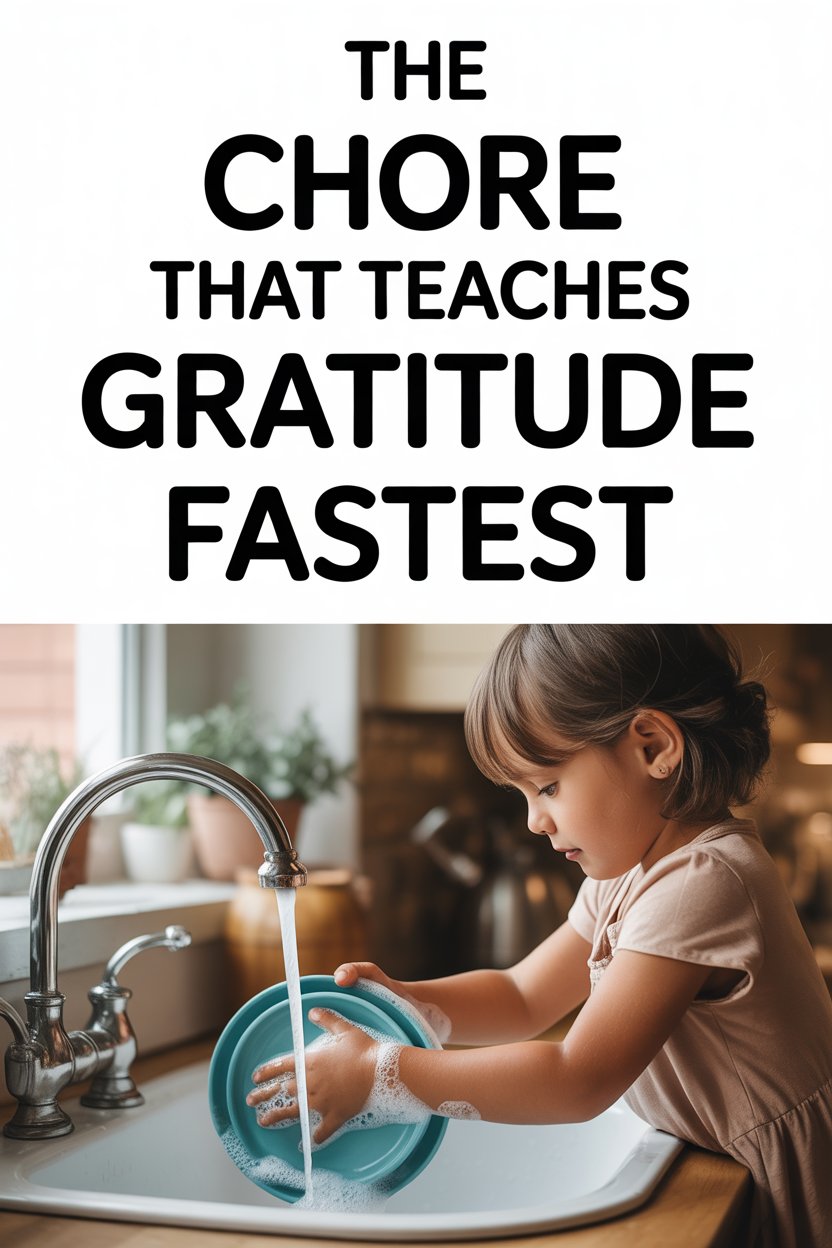
If you’ve ever closed your eyes, leaned back into the washing pile, and fantasized about your family thanking you for clean socks, you’re not alone.
Parents know emotional thank-yous are as rare as socks without holes. But what if there was one household chore that, when handed to your child, could teach gratitude at warp speed?
Spoiler: It’s not emptying the dishwasher.
Still with me? Good. Because we’re about to talk about the one task that rewires their little brains for thankfulness faster than you can say, “Whose mouldy banana is this?”
The Humble Power of Scrubbing the Toilet
For all the chores in the house, cleaning the toilet is the unsung champion of character development. Sure, taking out the bins is unpleasant; yes, washing dishes is tedious.
But the toilet? That’s next-level. It’s physical. It’s gross. It’s demanding. It’s absolutely impossible to ignore the very real consequences of not doing it.
Kids tend to assume toilets just…stay clean, as if a magical porcelain fairy flits through at night. Pass the job onto them even once and suddenly, the “invisible” person behind the scenes (that’s you) becomes a hero.
Why Toilet Duty Works Like Magic
Send your child into the bathroom with gloves, a brush, and a bottle of bleach. The first whiff alone will knock them off their high horse.
The level of gratitude that bubbles up after doing battle with the porcelain beast is instant and genuine.
Multiple studies suggest that children who experience the dirtier side of chores develop more empathy and appreciation for whoever usually handles those jobs.
The sensory overload, the discomfort, the sheer grossness—these things stick. Clean the loo once, and suddenly your offspring sees you, really sees you, as a person who’s been quietly shielding them from horror.
It’s Not Just About Grossness
You might be thinking, “Wait, is this just about grossing them out until they say thank you?” Not quite. The learning goes deeper. Scrubbing the toilet requires patience and attention to detail.
It can’t be rushed (unless you fancy living in a biohazard zone). It involves following steps in the right order, noticing what’s dirty, and standing back to assess the result.
This is where gratitude sprouts. Your child confronts the reality that “clean” isn’t an accident; someone had to work for it.
They feel relief when the job’s over, pride at a sparkling bowl, and—miraculously—a sliver of thankfulness for whoever saved them from this task all these years.
Getting Past the Whingeing
Handing over toilet duty won’t win you Parent of the Year. Expect groans. Expect Oscar-worthy performances about fainting and lifelong trauma.
Resist the urge to jump in or soften the blow. Empathy is built through discomfort. (Within reason, of course. We’re not monsters.)
Younger kids might need a quick tutorial—show them the brush, the cleaner, and yes, you’ll probably need to hover the first time to avoid chemical warfare or accidental flooding.
For older kids, a demonstration video from the cleaning product company (here’s one from Clorox’s official guide) can help.
Remind yourself: you’re not punishing them. You’re raising an adult who won’t shriek at a splotch of mystery bathroom muck.
The Ripple Effect on Family Appreciation
After conquering the toilet, your child will see every future flush through new eyes. Their senses have been awakened.
The next time you say, “Can you tidy your room?” expect less grumbling. The room, after all, doesn’t bite.
You may even catch them pausing before unleashing a toilet paper apocalypse, remembering that someone—maybe even them—will have to deal with the aftermath.
Families who rotate toilet duty report more mutual respect and fewer ‘it’s not fair’ arguments. Some even use chore-charts like OurHome to keep things transparent.
When the dirtiest job is shared, gratitude multiplies.
Turning Toilet Duty Into a Teaching Moment
A heartfelt talk after the gloves come off can cement the lesson. Acknowledge the unpleasantness. “I know it’s disgusting. I appreciate that you did it anyway.”
Ask them how they felt, and listen—without jumping in to correct or minimize.
Then, if you’re feeling brave, ask: “How did it feel when you saw it was clean at the end?” Sometimes, pride sneaks in. Even a simple, “I never knew it was so hard,” is a win.
Over time, you’ll notice your child’s attitude subtly shift. They may start offering help without being asked.
Or, in a truly rare moment, they might even thank you for dinner—because now, they get how much effort goes into doing things nobody really wants to do.
Making It Stick Without Nagging
Consistency is key. If you quit after the first week (or let their protests wear you down), the magic fades. Set a schedule. Rotate the job. Pair it with a treat—maybe everyone gets a slice of cake after the weekly cleaning blitz.
Keep things light. Humor works wonders. A playlist of silly songs or a “worst job of the week” trophy can turn groaning into giggling.
If you need help keeping chores on track, consider using family management apps like Cozi which can send reminders and turn mundane tasks into something closer to a family mission.
What About Other Chores?
Yes, there are other contenders for fastest gratitude-builder. Washing up after a spaghetti dinner? Epic. Scooping out the cat’s litter box? Character-forming.
But none pack the punch of toilet duty. It’s universal, unavoidable, and humbling.
Experts, like those in Harvard’s Making Caring Common Project, agree: jobs that make a visible difference in shared spaces prompt more appreciation than those with less obvious results.
The toilet, as the family’s most communal “throne room,” certainly fits the bill.
When Gratitude Starts to Grow
You’ll know the lesson has landed when your child starts noticing the invisible work around them. Maybe it’s a thank you for fresh sheets, or a “wow, you really do clean a lot.” No parade, no confetti, just a little spark of awareness.
And if you’re really lucky? One day, you’ll walk past the bathroom and catch them scrubbing—without complaint, and maybe even humming to themselves.
(Or, at the very least, they’ll stop pretending they can’t see the toothpaste splatter on the mirror. Progress is progress.)
The Real Secret Sauce
Gratitude isn’t something you can force with lectures. Kids need to live through a little discomfort, do something truly unglamorous, and see the world shift because of their effort.
Toilet duty delivers all of that in a single, stinky package.
So next time you’re doling out chores, give someone the gift of humility (and possibly a new respect for your cleaning prowess).
You might not get a standing ovation—but you will get kids who understand, deep down, what it means to appreciate the people who care for them every day.
And that, my friends, is something worth flushing for.