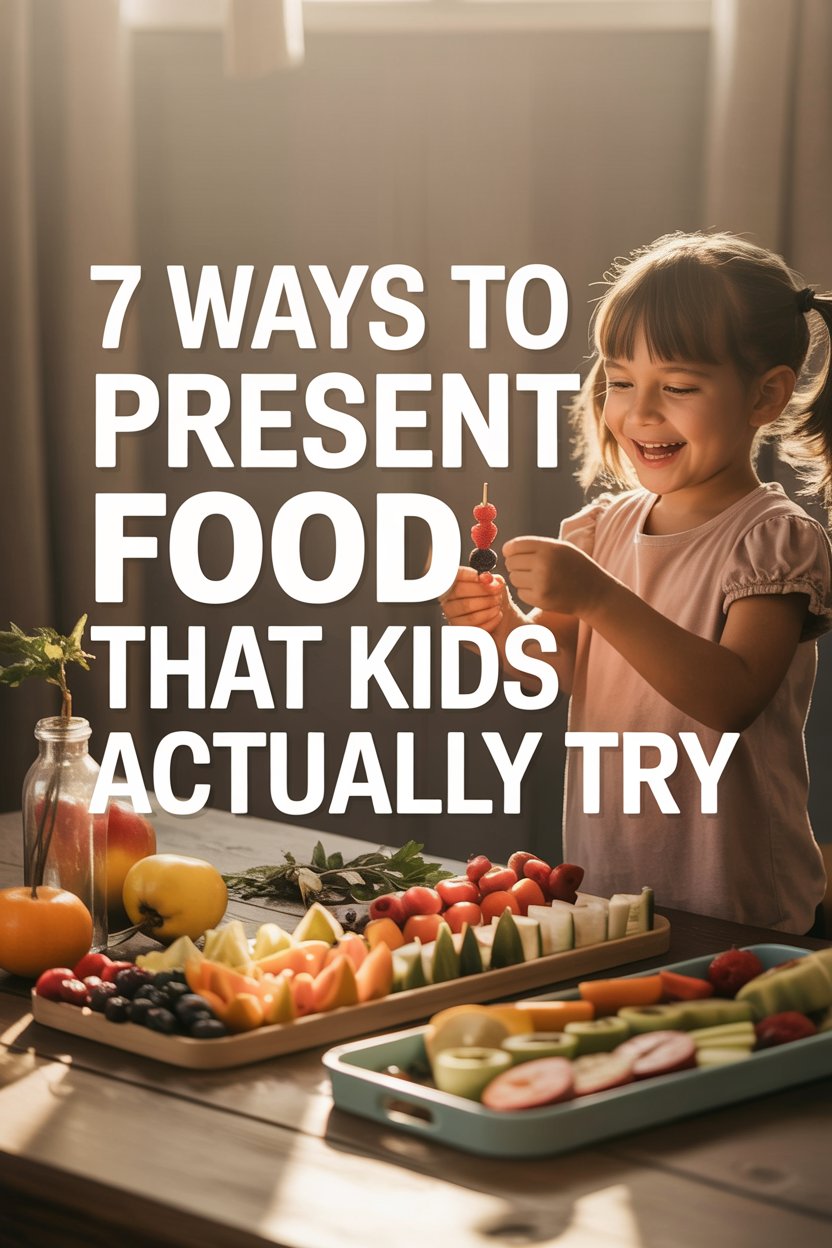
Feeding children isn’t for the faint of heart—or the weak of stomach. Even the boldest culinary efforts can be met with a steely gaze and a suspicious poke.
But there’s hope for those of us who have watched lovingly-prepared broccoli trees wither in untouched despair. Turns out, a bit of creativity at the table goes a long way.
Here are seven ways to present food that’ll have your kids tasting—maybe even liking—what’s on their plate.
1. Serve Food in Surprising Shapes
If a carrot looks like a star, surely it can’t be the enemy! Kids are remarkably susceptible to the magic of shapes.
Cookie cutters, apple corers, and a bit of patience can turn an ordinary lunch into a gallery of edible masterpieces. Sandwiches become butterflies, cheese slices morph into hearts, and cucumber coins suddenly seem like treasure.
Research from the British Nutrition Foundation suggests children are more open to trying new foods when they look fun and less “vegetably”. It’s a simple trick, but one that makes a genuine difference.
Besides, you finally get to justify that collection of novelty cookie cutters.
Don’t worry if your knife skills aren’t ready for a spot on MasterChef. Kids are far more forgiving of lopsided bears and wonky stars than any judge could ever be.
2. Add a Dip, and Watch the Magic Happen
Dipping isn’t just for chips. Even the most sceptical child will give a baby carrot a chance when it comes with a side of hummus, tzatziki, or good old-fashioned ketchup.
Suddenly, the food is a vehicle for sauce—and that’s apparently a lot more interesting.
There’s actual science behind this. A study in Appetite found that children ate significantly more vegetables when they were paired with dips.
The dip masks flavours they’re unsure about and lets them feel in control of their eating.
Try a few options and let your kids pick their favourite. And if you discover someone’s licking up the ranch without eating the veg, well, at least you tried.
3. Give Them the Power to Build
Taco night is more than a meal—it’s an event. There’s something irresistible about the chance to assemble your own dinner, no matter your age.
When kids are in charge of building (wraps, pizzas, Buddha bowls, you name it), they’re far more likely to eat what’s on the plate.
Lay out bowls of chopped veggies, proteins, and grains, and let them pile on what they fancy. The “I made this” effect kicks in and suddenly, courgettes are less threatening.
A review in the Journal of Nutrition Education and Behavior highlights how involving children in meal prep boosts their willingness to taste and eat a wider variety of foods.
Even if the results are…creative. (Pasta on pizza? Why not.)
4. Play With Colour and Contrast
Monochrome meals don’t inspire much excitement. (Looking at you, beige-on-beige fish fingers and chips.) Kids eat with their eyes first, so offer a rainbow where you can.
Bright berries next to cottage cheese, a yellow pepper ring perched atop a mound of peas, or a splash of tomato sauce on scrambled eggs all add visual interest.
If you can rustle up a few different coloured fruits or veg, you’re halfway there. No food dye required—unless you really fancy blue pancakes.
Turns out, there’s some psychological backing to this: a study from Cornell found that kids are drawn to meals with at least six different colours and multiple food items. It’s the edible version of a ball pit.
5. Tell a Story With the Meal
Every carrot stick is a magic wand, and every broccoli floret has potential as a tiny tree in a forest of mashed potato. If your child is more into fairy tales than food, use that to your advantage.
Weave stories into the meal: “This is the dragon’s treasure (sweetcorn), and these are the rocks of the castle (meatballs)…”
It may sound ridiculous, but a sprinkle of imagination can transform dinner from a battleground into a place of adventure.
Psychologists agree that connecting food to play and storytelling can encourage even fussy eaters to take a bite (and maybe even a second one).
Extra points if you manage to work in their favourite superhero saving the day with spinach.
6. Let Them Plate It Like a Chef
Give a child a blank plate and a few options, and you’ll see artistry (or chaos) unleashed. Lopsided towers of cheese, smiley faces made of peas, and abstract swirls of tomato sauce—every meal is a potential masterpiece.
This trick isn’t just about fun. Allowing children to plate their own food introduces them to new textures, shapes, and flavours in a way that feels like play, not pressure.
Even toddlers can join in by sprinkling seeds or arranging berries.
A 2018 study in Appetite showed that giving children choice and autonomy at the table increases their acceptance of unfamiliar foods. If the end result looks like a Jackson Pollock painting, all the better.
7. Embrace Tasting Plates and Small Portions
Big, grown-up servings can look downright intimidating to little eyes. Small plates, tasting boards, or even a “picnic platter” let kids sample at their own pace.
Arrange a few bites of several foods—tiny sandwiches, slices of fruit, a spoonful of pasta, a cube of cheese—rather than one big mound of anything. It feels less overwhelming and more like an invitation to try a bit of everything.
Some parents swear by using muffin tins for this purpose, each compartment filled with a different nibble.
Researchers have found that children offered small, varied portions were more likely to taste and accept new foods. It’s the buffet effect on a child-sized scale.
Tasting plates also mean less food wasted when an experiment bombs (no one needs a leftover mountain of cauliflower cheese). And if they love something, you can always serve seconds.
Small Changes, Big Wins
Getting children to try new foods can feel like a never-ending game of culinary whack-a-mole. One day they adore peas, the next they’re poison.
But a bit of playful presentation and a smidge of autonomy shifts supper from a source of stress to a possible moment of discovery.
Try one or two of these strategies this week. Maybe carrots will become dragons’ gold, or a mini tasting platter will spark interest where plain old stew never did.
And if all else fails—there’s always ketchup.