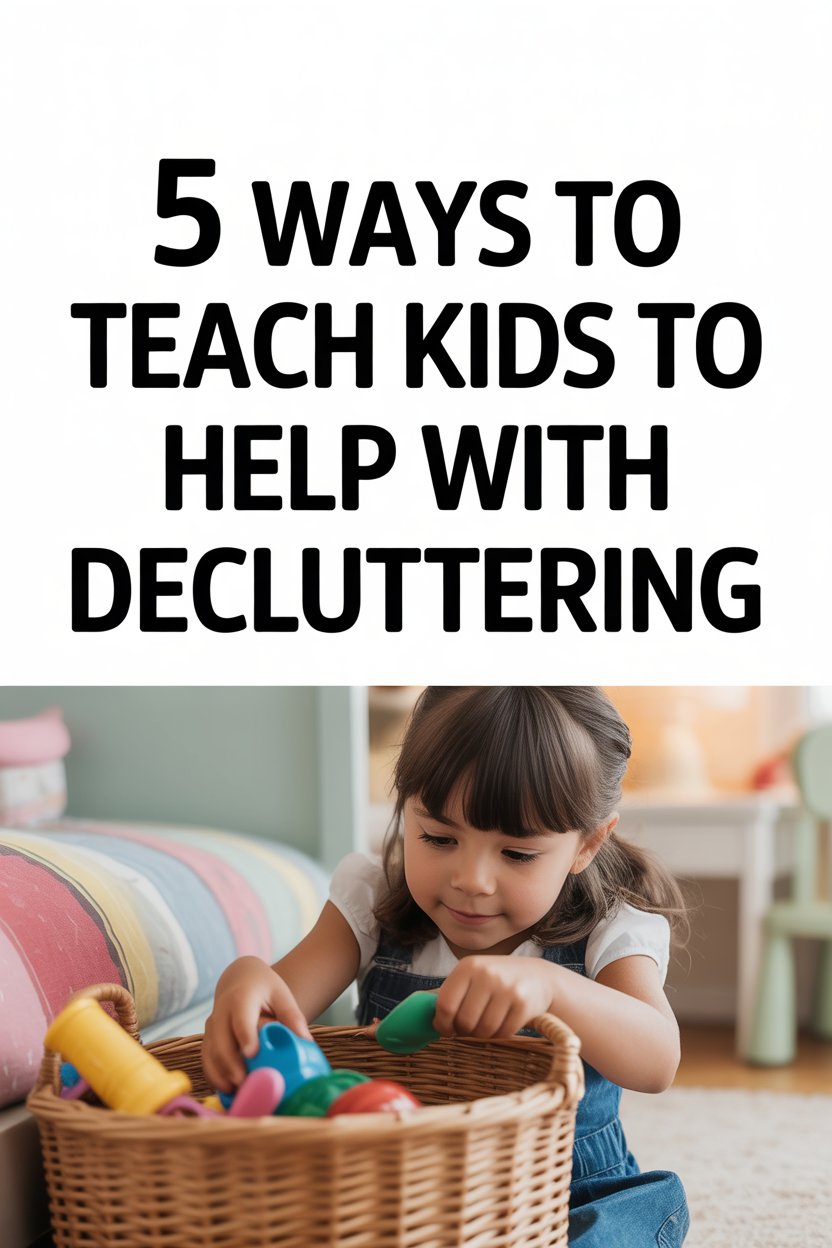
If there’s one universal truth in parenting, it’s this: kids come with stuff. So much stuff. Trinkets, crinkled artwork, that plastic whistle from a party bag you thought had “disappeared.”
For many overwhelmed parents, the concept of decluttering with children sounds about as relaxing as herding cats through a carwash.
But—take heart! With a bit of strategy (and humour), children can absolutely pitch in.
Teaching kids to help with decluttering actually builds life skills, strengthens family bonds, and might even rescue your feet from a stray LEGO.
Here’s how to turn your little clutter‑magnets into pint‑sized tidying pros.
1. Make Decluttering a Game
If you’ve ever asked a child to “please tidy your room” and met a reaction best described as “meltdown adjacent,” it might be time to ditch the word chore.
Children, experts remind us, are wired for play and thrive on positive feedback. The trick is to sneak a bit of fun into the tidying process.
Try “The 10‑Minute Toy Dash,” where everyone runs around for ten minutes gathering as many out‑of‑place items as possible. Whoever collects the most wins… bragging rights, or (if you’re feeling generous) the privilege of picking dinner.
You can also set a timer and make it a race against the clock.
For little ones, stories work wonders. Maybe the stuffed animals want a clean home, or the toy cars want “parking spots.” You’d be surprised how quickly a child will tidy if their favourite dinosaur is “hungry” for blocks.
Harvard researchers have highlighted just how powerful playful learning can be, especially for tasks that feel overwhelming. If the kids are laughing while they work, you’re halfway there.
2. Model Decluttering (and Let Them Lead Sometimes)
Children have a built‑in radar for hypocrisy. “Why do I have to get rid of old books when you have fifteen chipped mugs?” If you’re aiming for household buy‑in, showing them your own decluttering process is essential.
Start with your things. Narrate your decisions out loud, as though you’re starring in a particularly riveting episode of Parent Sorts Her Sock Drawer.
For example: “I haven’t worn these shoes since 2019. Maybe someone else could use them.” This normalises letting go and helps children grasp the logic behind decluttering.
Just as important: hand over the reins occasionally. Give children some ownership. Maybe they choose one area to sort—like the art caddy or the “mystery” drawer.
Even young children love the power of “you’re in charge!”
Research from the University of Michigan suggests that when kids feel included in decisions and see adults modelling healthy habits, those habits are far more likely to stick.
3. Attach Decluttering to Values (Not Shame)
It’s tempting to say, “You never play with this, we need to clear it out.” That phrase rarely inspires a spirit of generosity—more likely, it sparks defensive hoarding and dramatic clutching of broken Happy Meal toys.
Flip the script: focus on values your family cares about, like kindness or sustainability. Discuss how donating gently‑used toys lets other children have fun, or how clearing out makes space for things they truly love.
For many families, this might mean making a “donation box” part of regular life—maybe it lives in the hallway for easy access. When the box fills, take the kids with you to the charity shop or shelter.
Let them see, and feel proud of, their impact.
The Child Mind Institute notes that kids as young as preschool can understand and embrace generosity if it’s woven into family culture. Decluttering, then, morphs from a “task” into an act of kindness—far less likely to spark pushback.
4. Break It Down and Stick to Routines
Staring down a mountain of toys or a sea of outgrown clothes is overwhelming for anyone—children especially. Instead of “clean your room,” try “let’s sort the books into two piles: ones you love and ones you don’t read anymore.”
Chunking the task into micro‑jobs works wonders. Today it’s stuffed toys, tomorrow it’s puzzles, and next week it might be socks with mysterious holes.
The sense of accomplishment adds up, and the job feels much more manageable.
Consistency helps, too. A ten‑minute tidy before dinner, or a “Sunday sort” once a month, creates a rhythm. When it’s simply part of the family routine, grumbling tends to dwindle. (Mostly.)
5. Celebrate Effort, Not Perfection
Decluttering with kids can be a lesson in—let’s call it—creative interpretation. They might proudly display a pile of “sorted” building blocks that looks suspiciously like every other pile of building blocks you’ve ever seen.
That’s okay. Praise the effort.
Specific feedback beats vague compliments. “I love how you found all the puzzle pieces and put them in the box—great job!” works better than a generic “good work.”
Kids are far more motivated by genuine praise for what they did, rather than what they accomplished.
A study by Stanford University found that children praised for effort develop more resilience and motivation than those praised simply for results.
If there’s a spectacular mess at the end? Celebrate the progress, not the Pinterest potential.
Put on a favourite song, do a silly dance, or plan a special treat—maybe a mug of hot chocolate or a round of biscuit dunking.
Turning Clutter into Connection
Decluttering will probably never make it onto anyone’s “favourite family ritual” list. But it can transform from a battleground into an opportunity for connection, learning, and even a laugh or two.
Kids learn not just where the shoes belong, but that their effort matters. Parents get a little breathing room—and maybe, just maybe, a floor clear enough for an impromptu dance party.
Remember: stuff is just that.
The memories you’re making together as you sort, donate, and celebrate progress? Those are the treasures worth keeping.